
Available for delivery beginning June 2027. Orders are due by the end of February 2027. See the catalog
Made to be written in and handed down.
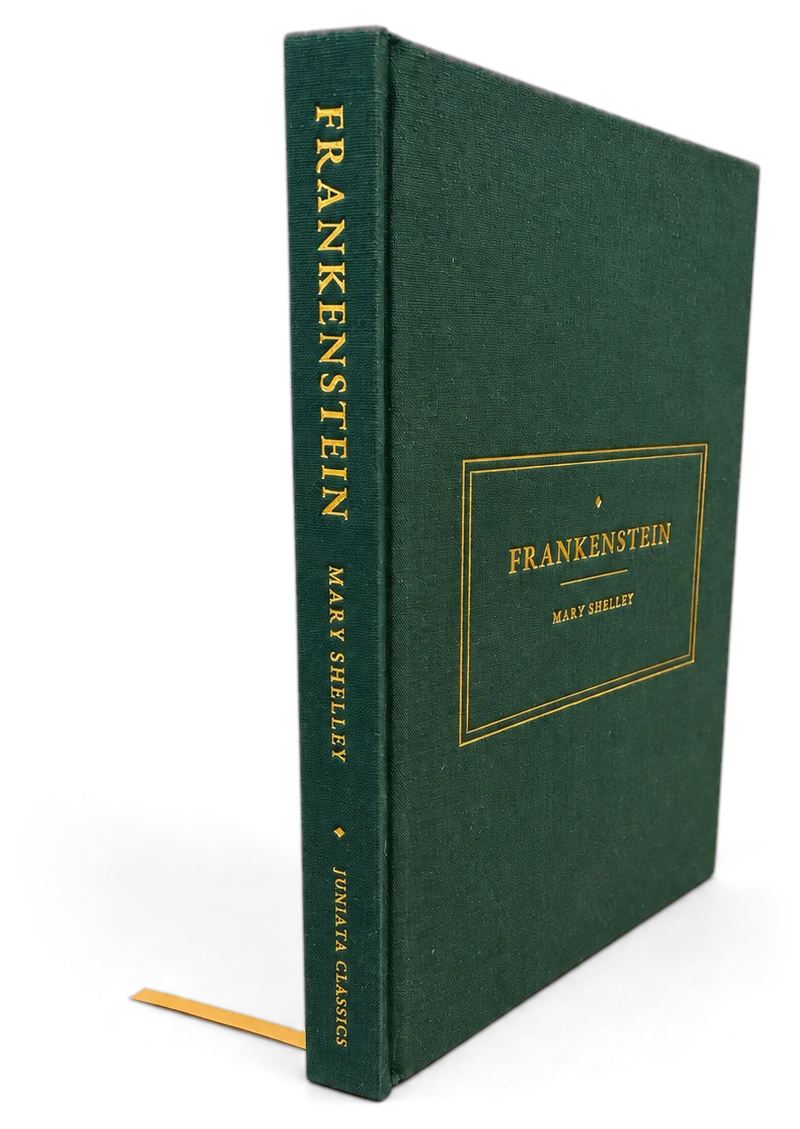
Sewn, clothbound editions of the great books, with a ruled margin on every page and a prompt at the close of each chapter. Sixty-three titles in the catalog.
“In the case of good books, the point is not to see how many of them you can get through, but rather how many can get through you—how many you can make your own.”
Each student keeps the copy they wrote in.
It goes home at the end of the year. Twenty years later, the margin still holds what they thought at fifteen.
Why we make these books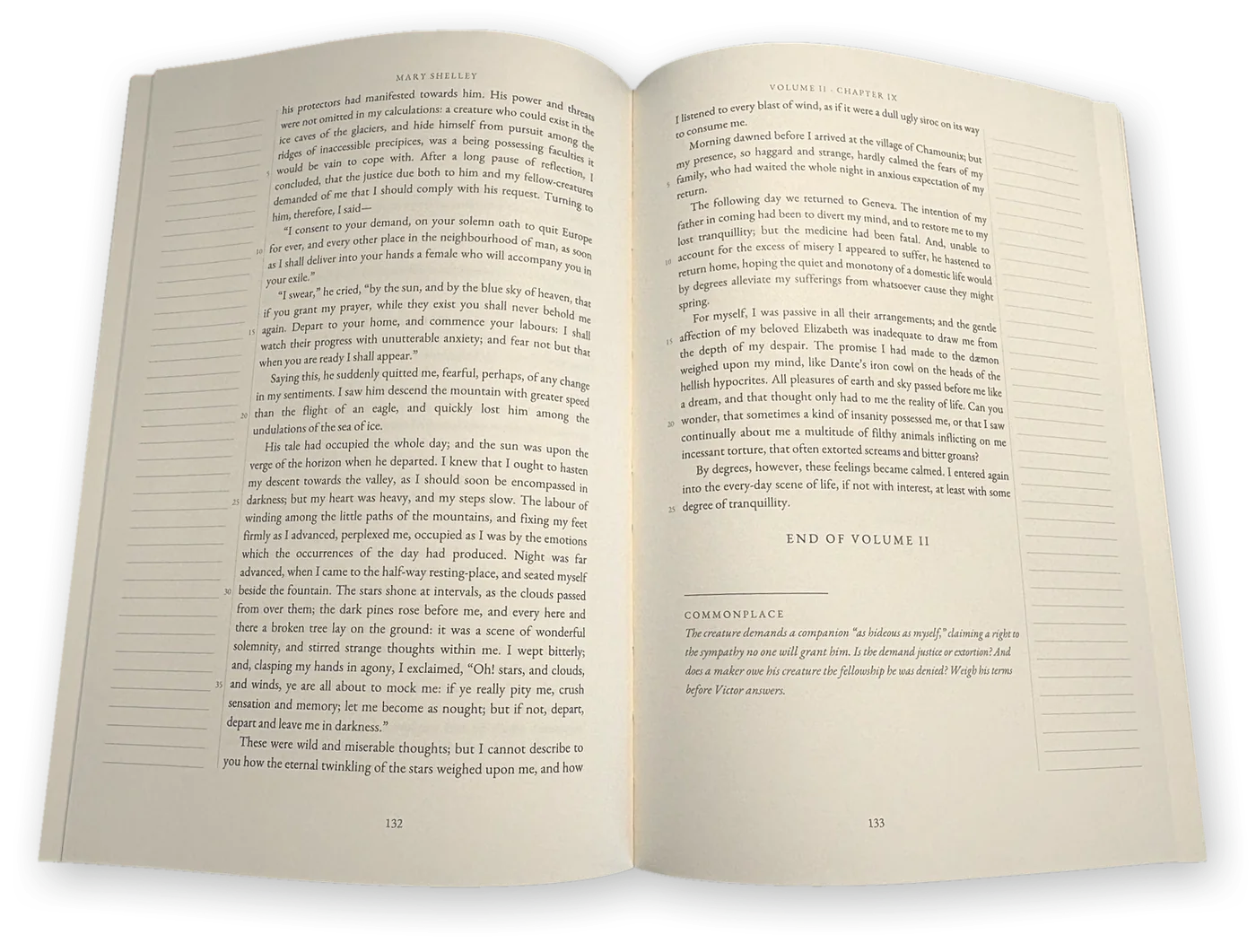
A page made for reading and writing.
We set every title on the same page. The type is EB Garamond at 11 on 15 points, with about sixty-seven characters to a line and thirty-nine lines to a page. Once a reader knows their way around one of our books, they know it in all of them.
Pages 132 and 133 of the printed Frankenstein.
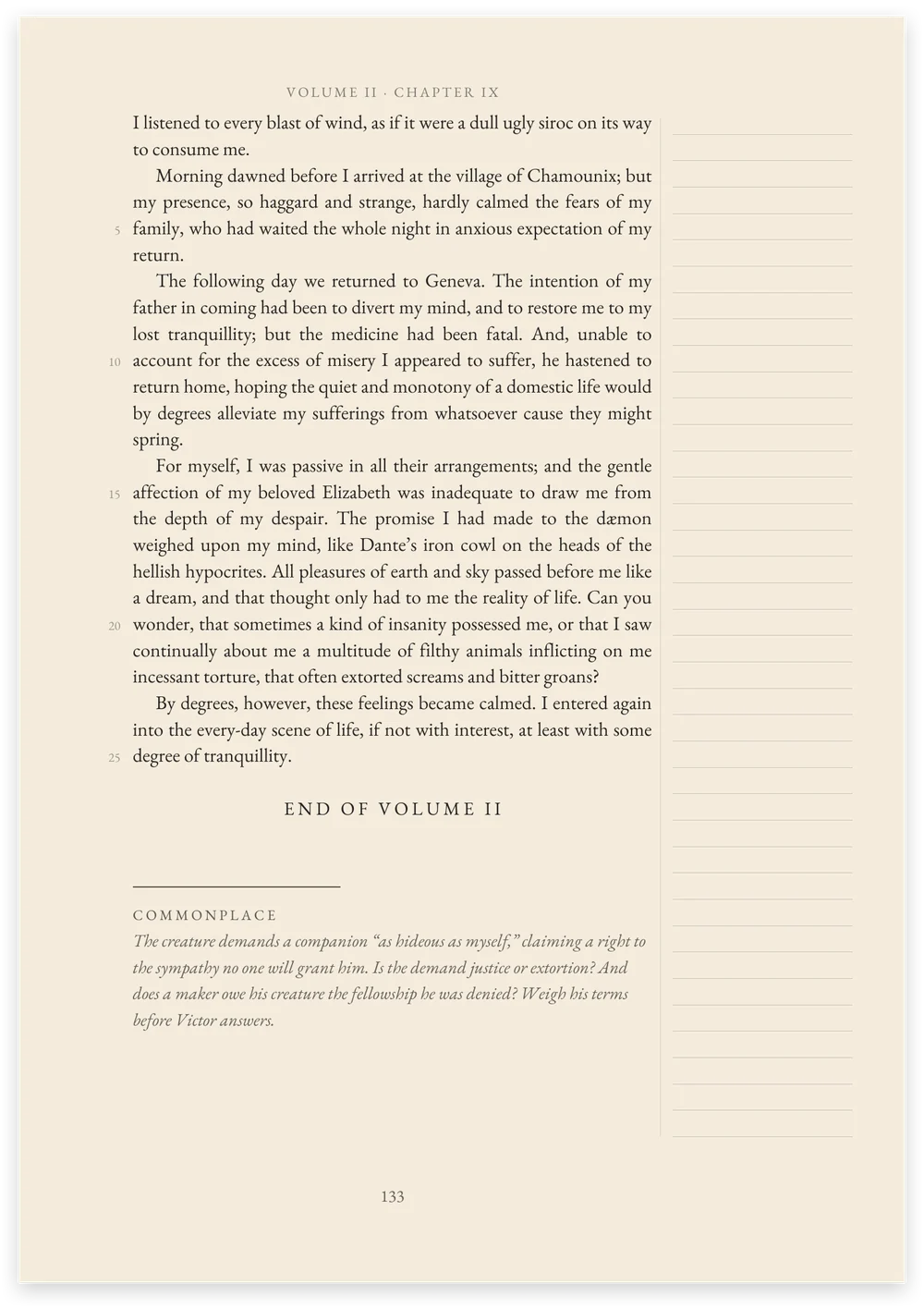
Numbered lines
Every fifth line is numbered, so a whole class can find the same sentence in seconds.
A ruled margin
The outer margin is ruled for notes on both sides of the spread, with a rule beside each line of text.
A prompt at each chapter’s end
A few plain sentences that send the reader back into the chapter just finished.
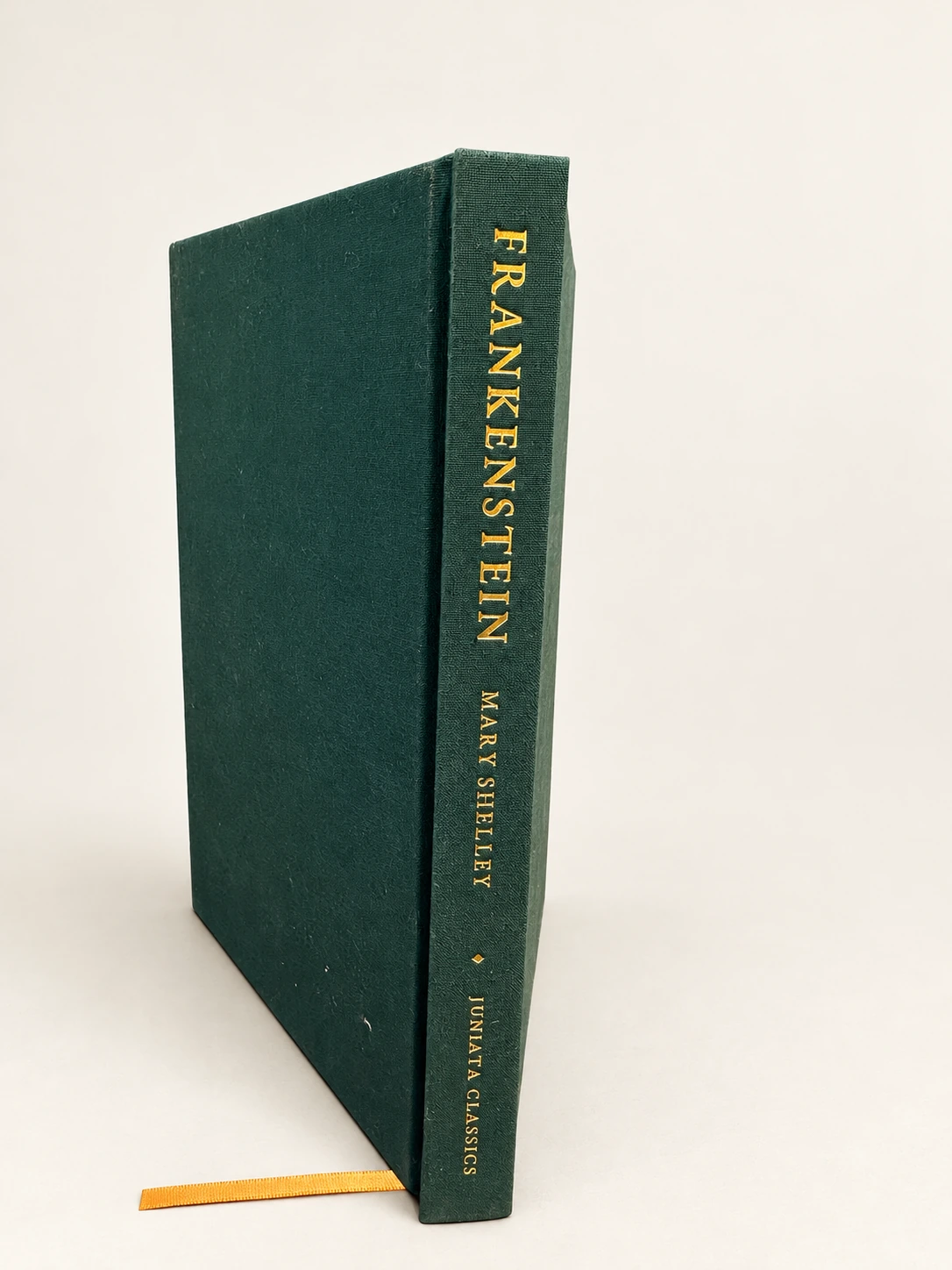
Made to last
Sewn signatures, cloth over board, 120 gsm cream paper and a ribbon marker.
Read about commonplacingOne great book a year
A school picks one or two books for a grade, and the class spends several weeks with each. Every student writes in a copy and takes it home. The sixty-three titles below come from reading lists schools already teach.
Each spine is drawn to scale and shelved by the grades where schools most often read the book. Click a spine to open its page.
Who we make them for
Tradere posteris
To hand on to those who come after.
Tradere is the Latin root of our word tradition. Someone handed the great books down to us. We make them so a reader can hand them on, with their own notes in the margin.
Why we make these books